Trade-up Profit Calculator
A data pipeline and calculator that finds profitable CS2 trade-up contracts – market data ingestion, probability model and a tested TypeScript core.
- Role
- Solo Developer
- Year
- 2024
Problem
Trade-up contracts hide a genuine expected-value calculation behind fluctuating market prices – doing it by hand is slow and error-prone.
Solution
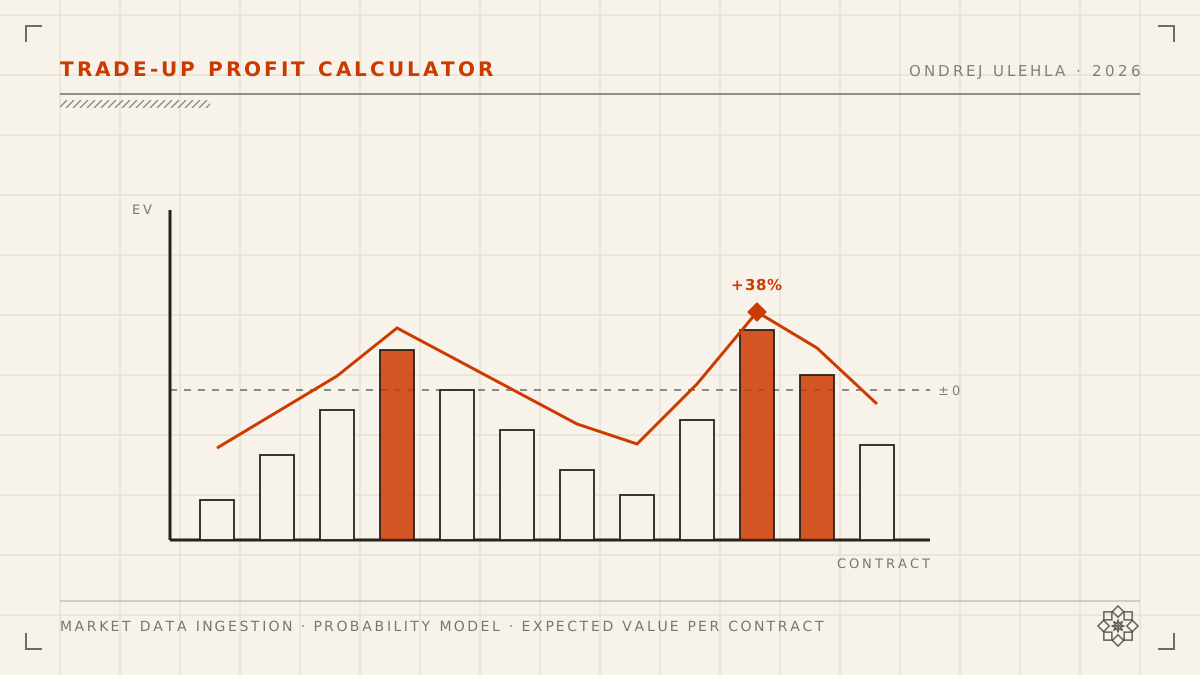
An automated pipeline that ingests market prices, models outcome probabilities and float values, and ranks every possible contract by expected profit.
Outcome
Evaluates thousands of contract combinations in seconds; the probability core is fully unit-tested against known outcomes.
Context
In Counter-Strike 2, a trade-up contract converts ten lower-tier skins into one random higher-tier skin. Whether that gamble is profitable is a pure math problem – expected value over outcome probabilities and current market prices – but the inputs shift constantly.
Problem
Doing the calculation manually means juggling price lists, collection pools, float ranges and probability weights for every candidate combination. Humans give up after a handful; the interesting opportunities live in the long tail.
Solution
A TypeScript pipeline in three stages:
- Ingestion – market price snapshots pulled into SQLite with rate-limit-aware fetching
- Model – outcome probabilities per collection, float value propagation, fee-adjusted pricing
- Ranking – exhaustive search over viable input pools, ranked by expected profit and variance
The probability model is the heart of it, so it’s covered by Vitest unit tests against hand-verified contract outcomes – refactoring the math is safe.
Outcome
- Thousands of combinations evaluated in seconds instead of hours of spreadsheet work
- Reproducible results backed by versioned price snapshots
- A tested core I can extend to new game economies
What I learned
Data quality beats model sophistication – most “profitable” contracts turned out to be stale-price artifacts until ingestion got strict about freshness.