AI Application Platform
A TypeScript monorepo platform for building AI-powered business applications – plugin architecture, typed APIs and a shared design system.
- Role
- Architect & Fullstack Developer
- Year
- 2025
Problem
Every new AI project started from scratch – auth, data layer, LLM plumbing and UI were rebuilt again and again.
Solution
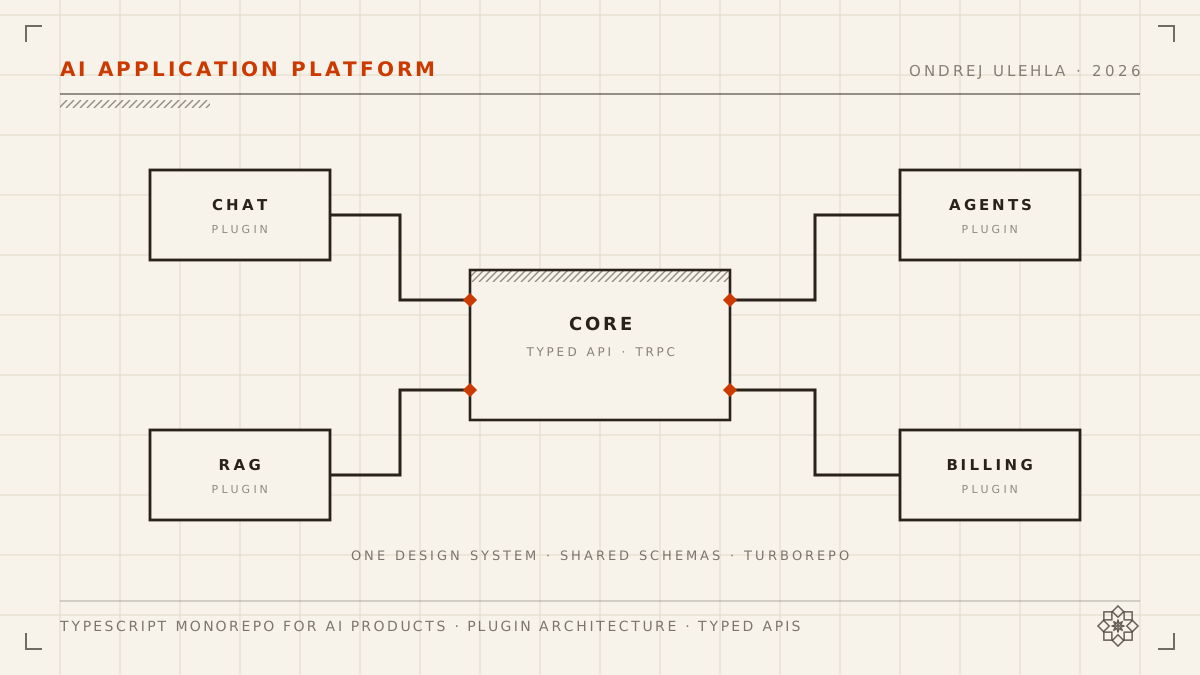
A modular monorepo platform with a plugin architecture: shared packages for auth, database, LLM orchestration and UI, so a new app is scaffolded in hours.
Outcome
New AI application prototypes go from idea to running demo in under a day instead of weeks.
Context
Building AI-powered applications for clients kept following the same pattern: a React frontend, a typed API, a relational database, and an orchestration layer talking to LLM providers. Yet each project started from an empty folder – and the first two weeks were always spent rebuilding the same foundations.
Problem
The repeated setup wasn’t just slow, it was inconsistent. Each project solved auth, migrations, error handling and LLM streaming slightly differently, which made maintenance across projects expensive and onboarding painful.
Solution
I designed a Turborepo monorepo platform with clear boundaries:
packages/core– typed domain primitives, result types, validationpackages/db– Drizzle ORM schema factory with per-app migrationspackages/ai– LLM orchestration: provider-agnostic client, streaming, tool use, evalspackages/ui– shared design system (React + Tailwind)apps/*– thin applications composed from plugins
The key decision was the plugin architecture: an application declares the capabilities it needs (auth, files, AI chat, workflows) and the platform wires them together with typed contracts end to end – from the database schema through tRPC up to React hooks.
Outcome
- A new application scaffold runs locally in hours, not weeks
- One shared upgrade path: fixing a bug in the platform fixes it in every app
- Typed end-to-end: schema changes fail the build instead of failing in production
What I learned
Designing for the second and third consumer of an abstraction is what makes a platform – the first consumer always looks fine.